

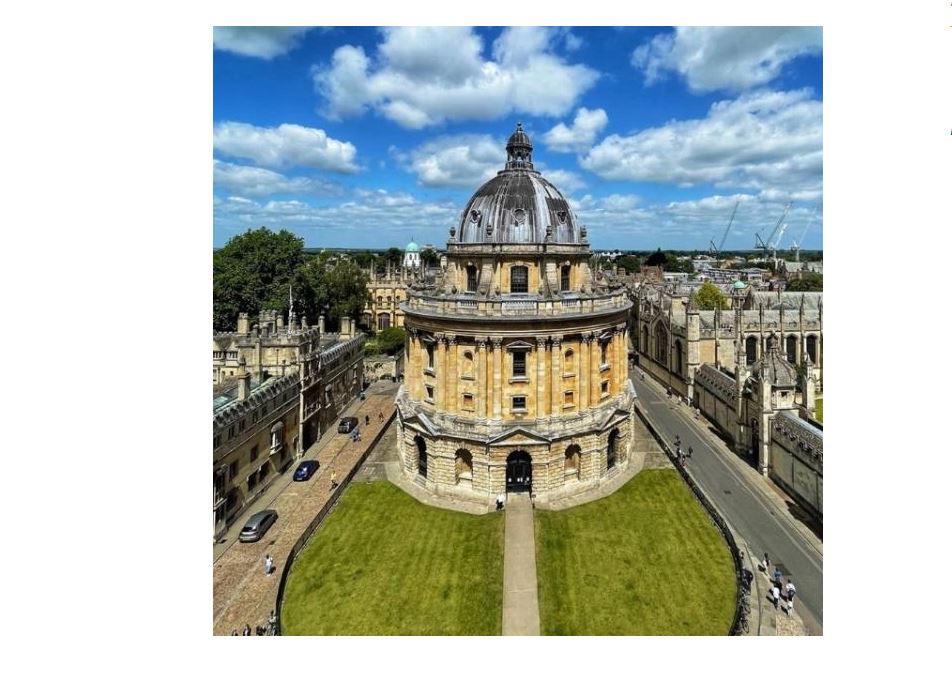
The University of Oxford has teamed up with Swiss investment bank UBS to launch a new centre for applied AI. The Oxford-UBS Centre for Applied AI aims to deepen the understanding of AI through research and promote its practical application.
The research will focus on three main areas: AI and society, which includes aspects of AI governance, the future of work, and sustainability; AI for business and economy, including applications of AI in driving innovation and transformation across business and economic ecosystems; and AI futures, which includes the exploration of emerging AI paradigms, model developments and their applications.
The centre will be run by a newly endowed UBS Professor for Applied AI at Oxford Saïd Business School, who will be supported by a team of 20 researchers. UBS stated that the researchers will collaborate closely with the bank’s practitioners to apply their findings to real-world applications.
“AI represents a fundamental opportunity to change how we operate and create value for clients,” said Mike Dargan, UBS group chief operations and technology officer. “We are delighted that UBS will be partnering with the University of Oxford to foster pioneering AI research and develop practical tools and solutions that can be implemented at scale across our firm, accelerating our journey to become a fully AI-enabled institution and shaping the future of financial services.”
UBS currently manages £5.7 trillion of invested assets, according to the third quarter 2025 figures. Headquartered in Zurich, Switzerland, the firm operates across 50 markets around the world.
In response to the partnership with the bank, Professor Irene Tracey, vice-chancellor of the University of Oxford, said: “It is wonderful to announce this exciting and important partnership that brings together one of the world’s leading universities with a globally leading financial services institution. This dynamic multidisciplinary partnership will lead to pioneering new AI research solutions and practical applications at a time of unprecedented technological change.”
Image source: Saïd Business School, University of Oxford