UoB develop open-source Python tool to support space weather modelling
 R Sahota
Posted On April 17, 2026
R Sahota
Posted On April 17, 2026
Researchers at the University of Birmingham have developed new open-source software designed to help scientists model how electromagnetic waves interact with high-energy particles in space.
The Python-based tool, known as PIRAN (Particles In ResonANce), enables researchers to better understand particle behaviour in Earth’s radiation belts, where high-energy electrons can damage satellites and influence space weather. Improved modelling of these processes is important for protecting astronauts, power systems and communications infrastructure.
The research, published in Earth and Space Science, outlines how scientists use mathematical tools called diffusion coefficients to describe these interactions. These calculations are complex, as they represent the combined effect of numerous particle and wave interactions and typically require advanced physics modelling and intensive computation.
Until now, such calculations relied on specialist software that was often difficult to access. The PIRAN code provides an open-source alternative, offering a transparent and accessible Python-based solution for calculating relativistic diffusion coefficients using modern computational methods.
The project was developed in collaboration with Los Alamos National Laboratory, University of Exeter and Northumbria University. The software is designed to be extended by other researchers, allowing additional wave types, particle species and physics models to be incorporated over time.
Lead author Dr Oliver Allanson said: “These calculations are essential for understanding how charged particles behave in Earth’s radiation belts, yet until now they required specialist, hard-to-access software. This open-source PIRAN code gives the international space science community, for the first time, a fully transparent and accessible Python-based tool for calculating relativistic diffusion coefficients using modern methods.
“By making these capabilities openly available in Python, PIRAN removes a major barrier for researchers and enables wider, more collaborative development of future space weather models.”
The software produces results consistent with established scientific codes and is the first fully open-source platform to include both major calculation methods. Written entirely in Python, it is designed to be easy to read, modify and expand by the research community.
Currently, PIRAN supports calculations for electron diffusion coefficients based on whistler-mode waves in a fully ionised proton-electron cold plasma. Future updates could extend its capabilities to other wave modes and plasma compositions, supporting further work in radiation belt modelling and space weather prediction.
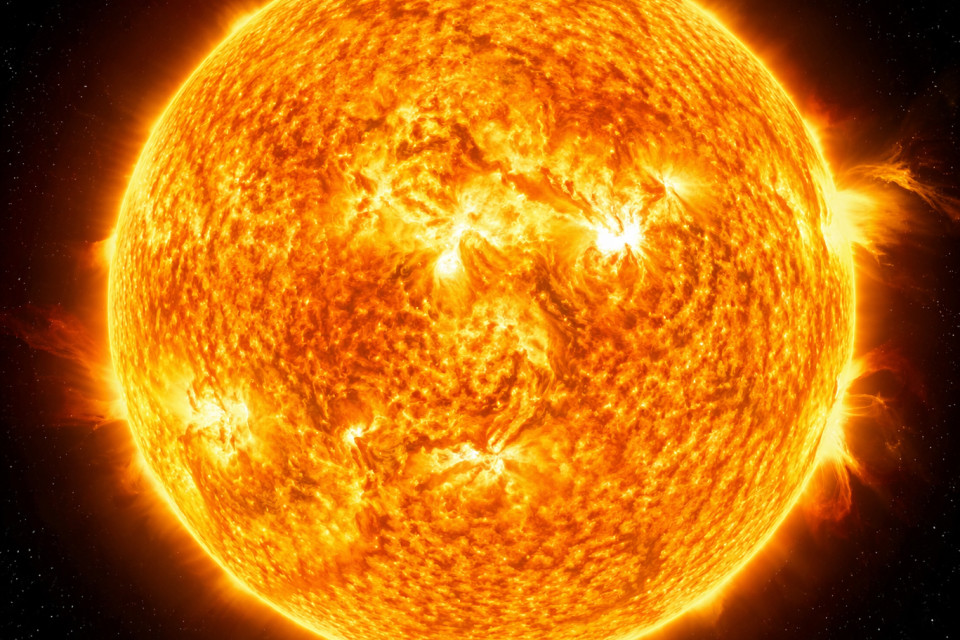
Image source: DALL-E
Trending Now

You may also like