


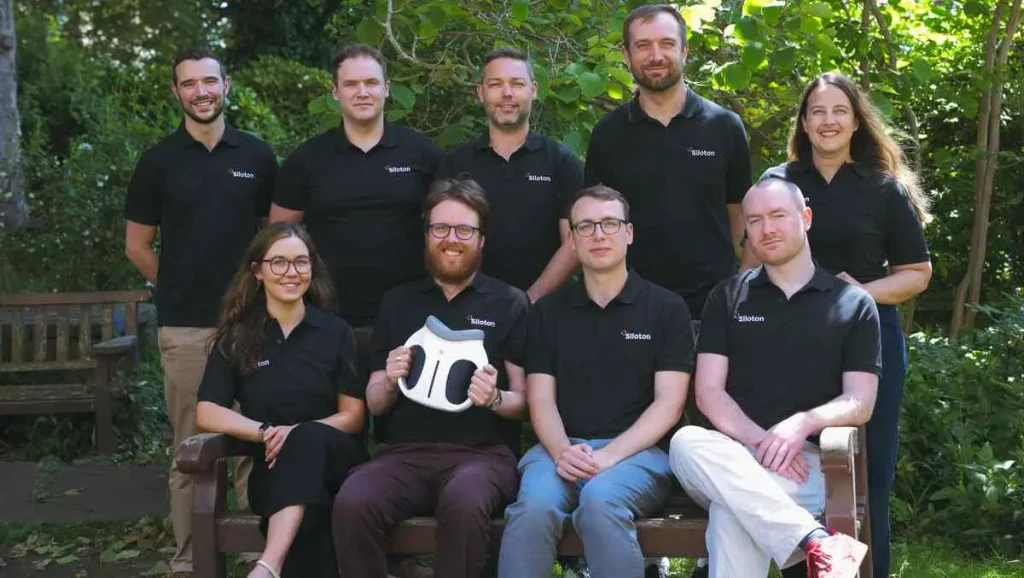
Bristol-based medical technology startup Siloton has been awarded an £8.4 million commercial contract by Innovate UK to accelerate the clinical development of its portable retinal imaging technology.
The two-year agreement, funded through the Contracts for Innovation: Quantum Missions Primer initiative, supports the development and clinical testing of Siloton’s GiraffeOCT optical coherence tomography (OCT) system. OCT devices use light measurements to generate detailed images of the retina, allowing clinicians to detect and monitor eye diseases.
Current commercial OCT machines are large, desktop-sized hospital installations. Siloton’s technology compresses these optical components onto a photonic chip smaller than a £1 coin, allowing the creation of portable handheld devices for use in community clinics and patient homes.
Under the terms of the contract, Siloton will run clinical trials in partnership with Sunderland Specialist Eye Hospital, testing in-clinic versions of its scanning device with patients in the North East and North Cumbria. Independent health economics data from the trial will be analysed by the York Health Economics Consortium to evaluate potential NHS cost savings.
Ophthalmology represents the single largest outpatient speciality in the NHS, recording approximately nine million attendances in England during 2023/24. Official figures show that nearly 623,000 patients were waiting for an ophthalmology appointment in England at the end of July 2026, accounting for 8.7 per cent of total NHS waiting lists.
The project forms part of wider government objectives under the National Quantum Strategy, which targets the deployment of quantum sensing technologies within NHS trusts by 2030. Siloton expects the contract to shorten its technology development timeline by up to two years and plans to expand its headcount to 16 staff by August 2028.
Alasdair Price, chief executive of Siloton, said: “Developing the in‑clinic and at‑home versions of the system will help the government meet its ambitions of moving care into the community and bringing quantum technologies into the NHS. The contract will also allow us to expand our technology to cover a wider range of diseases, integrate our second‑generation BlueJay chip – the same architecture used in our system for astronauts – and build out the cloud platform that underpins the service.
“The NHS needs new technologies and new ways of working, and it needs them quickly. This contract is a first step toward streamlining the process and ensuring patients in the UK get access to the same innovations as other countries, as soon as they are deployed rather than years after approval.”
Researchers at the University College London (UCL) Great Ormond Street Institute of Child Health teamed up with Siloton in September, working together on a project that aims to prevent childhood sight loss by adapting a pioneering new eye imaging technology.
Image source: Siloton